HISTORY
Thousands of years old
Baskets from a Spanish cave are about 9,500 years old, and fibre crafts in Europe reach back far further.
See the evidence doodlebasket
00ONE OF THE OLDEST CRAFTS
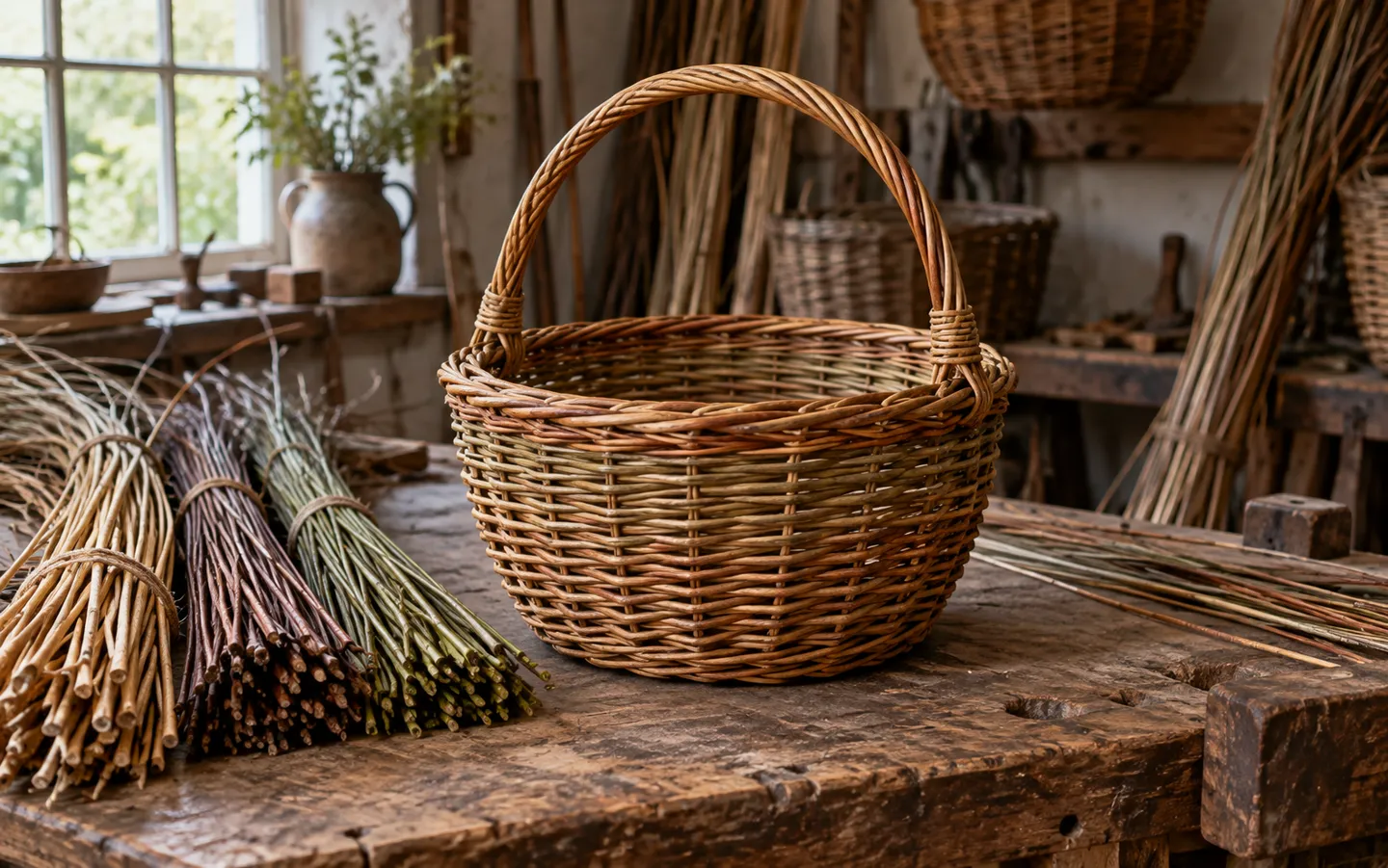
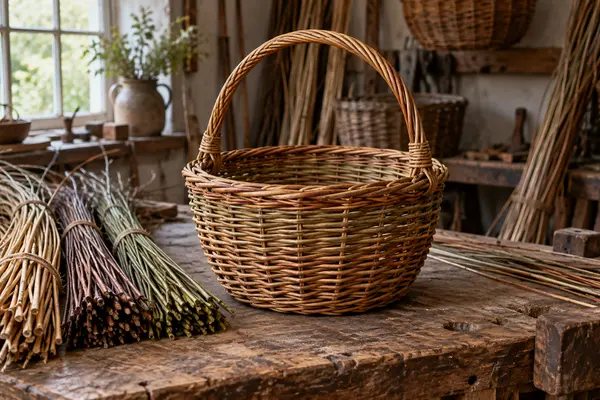
For thousands of years, people have woven plants into containers.
Baskets rarely survive, yet some from a cave in southern Spain have been dated to about 9,500 years ago. Here is what archaeologists know, what baskets are made from, and how the basic weaves turn soft stems into something strong.
Plain English, with the sources linked.
Find the weave01Principles
02THE SHORT STORY
Plant fibres seldom survive,
so every ancient basket is a lucky find.
HISTORY
Baskets from a Spanish cave are about 9,500 years old, and fibre crafts in Europe reach back far further.
See the evidenceMATERIALS
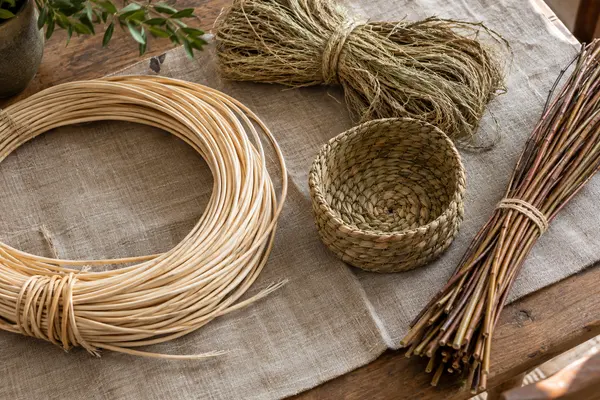
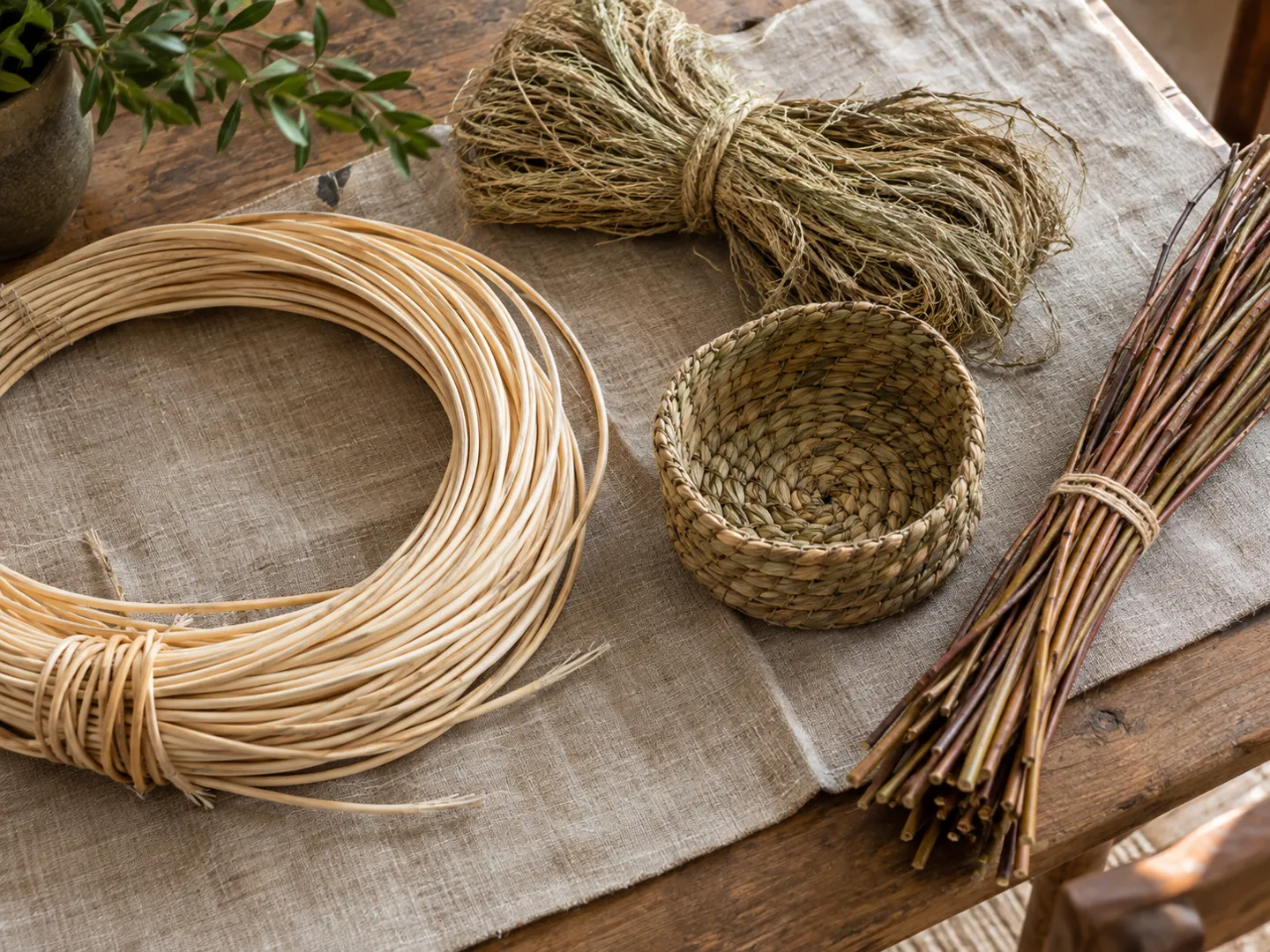
Almost any flexible stem or leaf will do: willow rods, rattan cane, reed, hazel or esparto grass.
Meet the materialsTECHNIQUE
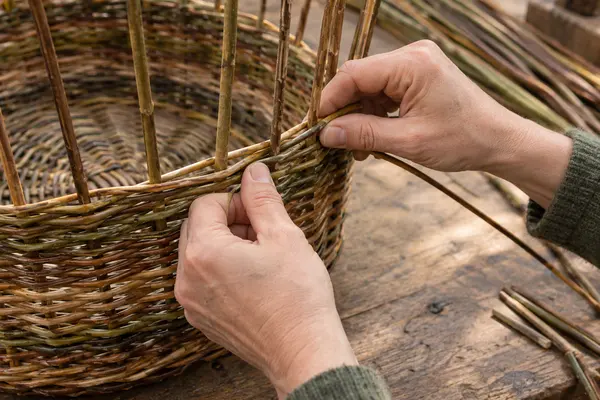
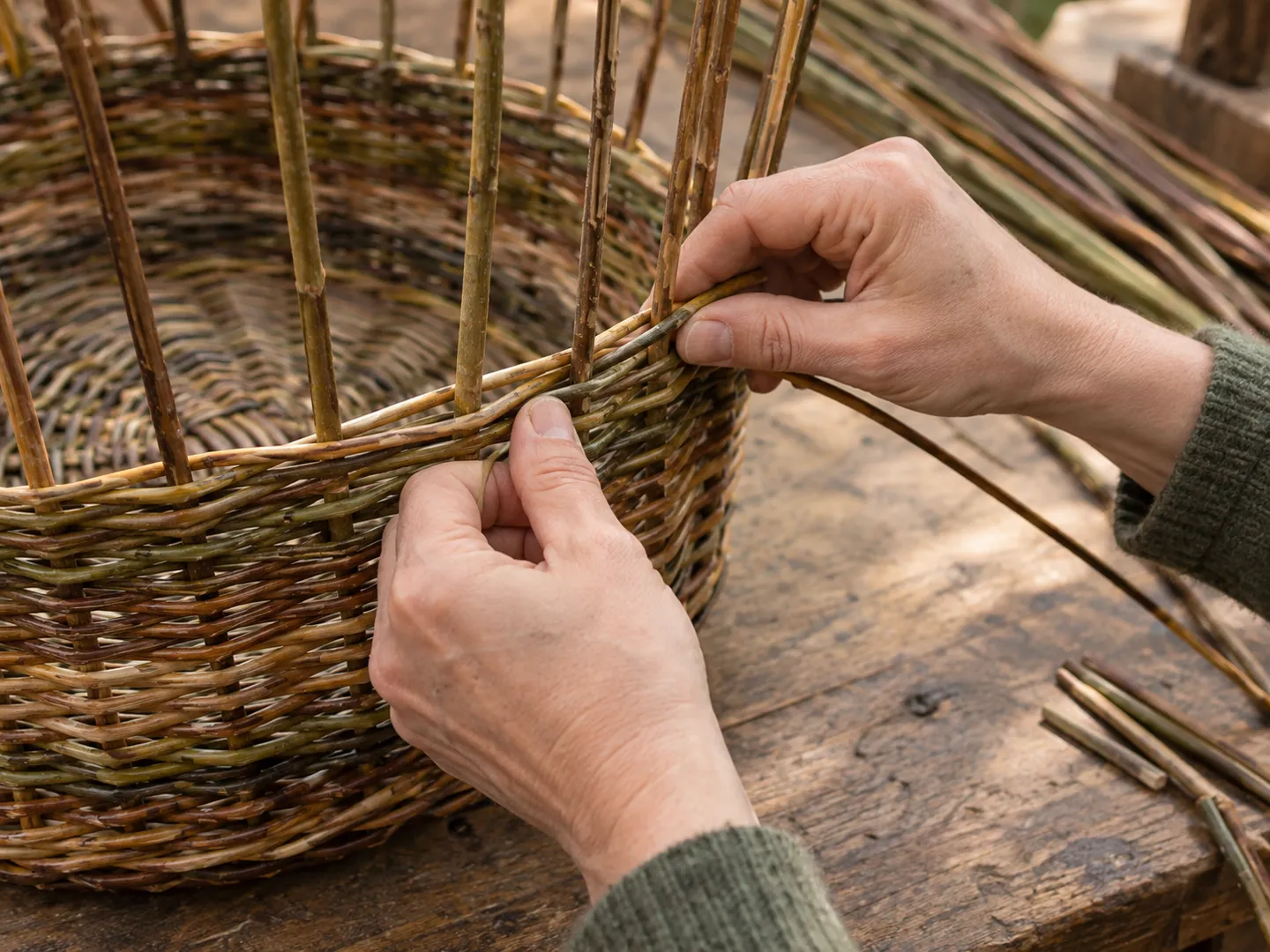
Coiling, plaiting, twining and stake and strand cover most baskets you will ever see.
Try the weave finder03WEAVE FINDER
Pick a technique to see how it builds a basket. The descriptions follow the technique notes published by UCL's Digital Egypt museum resource.
Many baskets combine more than one technique, for example a different weave for the base, the sides and the rim.
04TWO PIECES OF EVIDENCE
Two places where the record
of basketry is unusually clear.
9,500 years old
Hunter-gatherer baskets, carbon-dated
Researchers ran 14 radiocarbon dates on 76 plant-based objects from Cueva de los Murciélagos in Granada. They span about 7500 to 4200 BCE, making them the oldest known hunter-gatherer baskets in southern Europe. They were made from plants including esparto grass, reed and wood.
SOUTHERN SPAIN · 2023 STUDY
Coiling first
The main early technique
In Egypt's predynastic periods coiling was the most important basket technique. Plaiting, sewn plaits and stake-and-strand baskets were introduced much later, in the Ptolemaic Period (305–30 BC).
ANCIENT EGYPT · 5000–3000 BC
Both finds depend on dry conditions. In damp ground, baskets usually rot away and leave nothing behind.
05LOOK CLOSER
Start with the base. A spiral points to coiling, a checked grid to plaiting, and spokes radiating from the centre to a stake-and-strand frame.
Trace a single strand with your eye. If it passes over and under, it is woven or plaited; if it twists round a partner, it is twined.
Round, tapering rods suggest willow; smooth glossy strips suggest rattan cane; fine bundles suggest grass or rush.
Rural life and archaeology museums often show baskets beside the tools used to make them, which makes the techniques easier to follow.
06BASKET FACTS
Sophisticated textile technologies date back 30,000 years or more in Europe, and some researchers argue that basketry may have roots older still.
The Spanish baskets came to light in the 19th century, when miners dug into Cueva de los Murciélagos. The cave had been used as a burial site.
There are around 600 species of rattan in 13 genera, all in the tropics and subtropics of the Old World. The stems are solid, strong and flexible.
The common osier, Salix viminalis, grows to 6–7 metres and is widely cultivated and coppiced for its twigs, which are used in traditional basket-making.
The Museum of English Rural Life in Reading holds over 620 baskets, basketwork objects and basket-making tools.
07QUICK QUESTIONS
Short answers to the questions people ask most.
Very old, though the exact start is unknown because plant fibres rarely survive. The oldest well-dated hunter-gatherer baskets in southern Europe, from Cueva de los Murciélagos in Spain, are about 9,500 years old, and fibre technologies in Europe go back 30,000 years or more.
Fibre-based technologies do not preserve well in the archaeological record. Baskets usually rot away, so finds survive only in unusual conditions, such as the very dry cave in southern Spain where the 9,500-year-old examples were found.
In coiling, a bundle of material is wound into a spiral and stitched together. In plaiting, strands are interlaced over and under crossing strands. In twining, two strands twist around each bundle as they pass it.
Almost any flexible plant material. Willow rods are the traditional British choice; rattan, a climbing palm from the Old World tropics, is widely used for furniture and baskets; and the oldest Spanish baskets were made from plants including esparto grass.
Rattans are climbing palms. There are around 600 species in 13 genera, found in the tropics and subtropics of the Old World. Their solid, strong and flexible stems are used for everything from baskets to furniture frames.
08Sources
A NAME WORTH WEAVING
doodlebasket.com is part of the DoodleSale portfolio. It isn't in an auction right now, but you can ask about leasing it.